
KEEP CALM AND CARRY ON… UNTIL YOU CAN’T
How Stress, Grief, and Caregiving Broke My Body — and Led Me to My True Calling
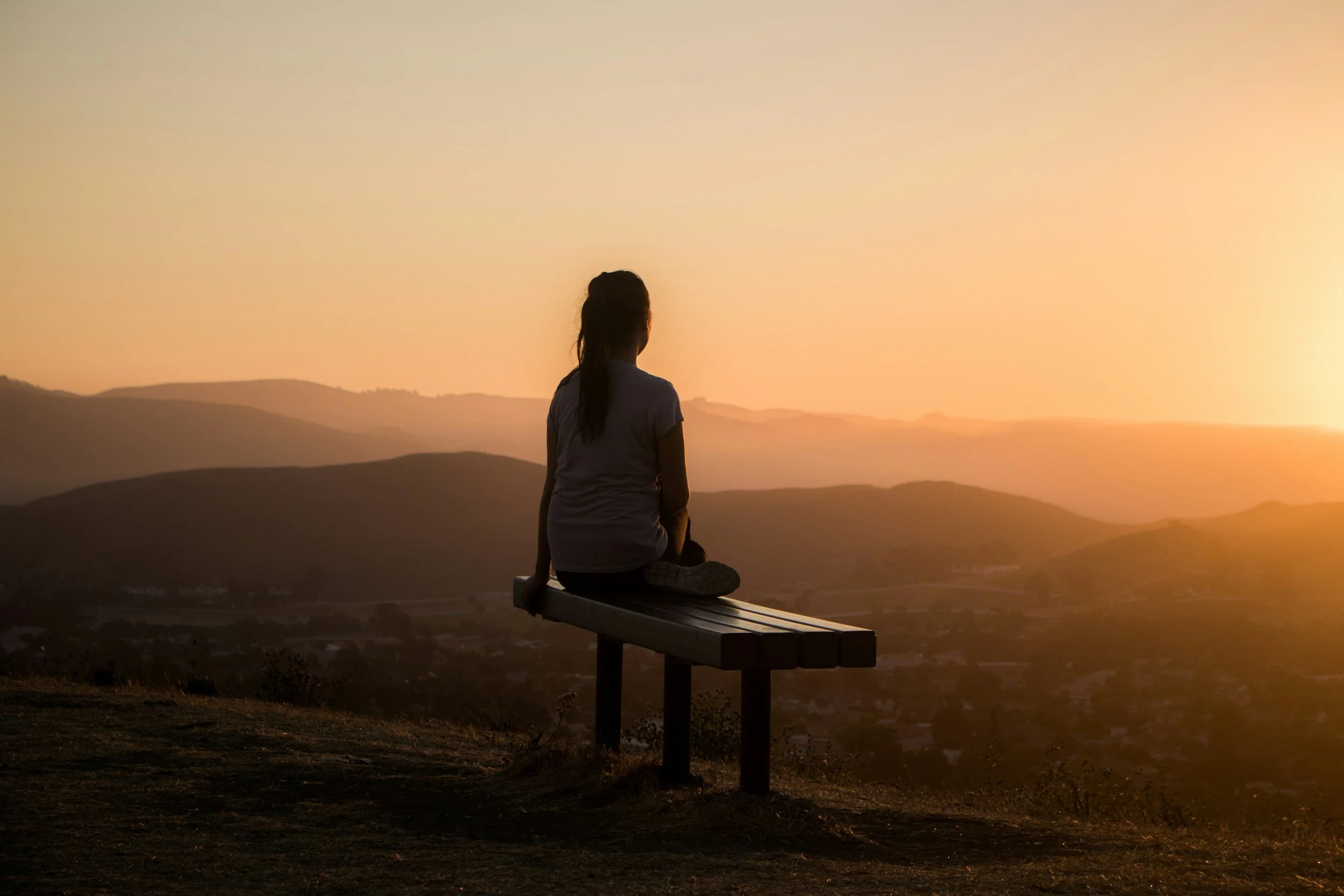
“Keep Calm and Carry On!”
It’s a phrase most British women know by heart — not just a slogan, but a way we were raised to behave. It’s certainly something my English side absorbed from my mother and from growing up in London: stay composed, stay capable, don’t make a fuss, just get on with it.
But here’s the truth we don’t say out loud enough:
Stress is one of the new number-one killers of our age.
We’re taught to swallow it, suppress it, style it out… yet inside, the body is paying a price we don’t see until it’s too late.
We all know we have it, yet most of us have absolutely no idea how to deal with it. Even when we do know we’re under stress, we soldier on, determined to be “strong,” terrified of being seen as someone who needs help. On the outside, we look like we’re coping. On the inside, it’s another story entirely — a story the body usually reveals only when things are already too far gone.
Major health issues like cancer, heart disease, strokes, and those debilitating “mystery illnesses” rarely come out of nowhere. The body gives us signs long before — quiet, subtle warnings we brush off because we’re too busy holding the fort in crisis mode.
I know this all too well.
A Decade of Caregiving — and the First Crack
For ten years, I was the primary caregiver for my mum as she declined with Alzheimer’s. I had set up home in Los Angeles with my musician husband in 2008, yet every 6–8 weeks I was flying back to London to check on her. It was a relentless emotional commute. My best friend — truly like a sister — B, lived nearby and helped me watch over her. As my mother used to say, B was her “second daughter.” Without her, I don’t know how I would have survived those years.
Looking after my late father’s art estate meant I could keep this rhythm going… until the pandemic hit. The isolation of her sheltered accommodation accelerated her decline, and B and I moved her into full-time care. Then came the moment that broke me: I had seven days to pack up her entire home — alone — while the world was shut down. I sold her furniture, cleared decades of memories, and moved every personal belonging by myself.
That was the first time my body gave me a real warning.
I genuinely thought I was having a heart attack. A tiny voice in the back of my mind remembered hearing that panic attacks can mimic heart attacks, and something primal kicked in. I slowed my breathing, deep and deliberate, and somehow calmed myself down. A natural instinct… from somewhere deep within.
That was my body’s first warning — and I ignored it.
Looking back, it was the moment my body tried to save me. I just didn’t know how to listen yet, or understand that I was, by nature, an empath and a healer — someone who absorbs the emotional weight of everyone around her.
Losing My Mum — Survival Mode Activated
In 2022, everything accelerated.
I got that call — the one we all dread. B rang me at a strange hour, and I knew something was wrong. She told me she had stage 3 ovarian cancer, already spreading into her bowels.
I booked a flight to London immediately and switched into full crisis mode. I contacted every person I knew who had dealt with cancer holistically. I researched everything: diet, supplements, mindfulness, oxygen therapy, high-dose vitamin C, cannabis, CBD — all of it.
The journey to B’s place took me an hour and a half door to door, and I did it every single day for the next month — on top of visiting my mother in her new care home in Epping. It meant juggling Overground trains, tubes, buses… you name it. I’d occasionally take a cab when I was too exhausted to think straight, but Ubering across London — east to west, daily — was simply impossible. I lived as far west as she lived east. Getting to Bianca wasn’t too bad, but adding my mother into the mix… well, you can imagine. The whole thing was a logistical nightmare stitched together with love and adrenaline.
And this is where fate — or karma, or whatever you want to call it — played its strange hand.
Just before all of this, I’d finally won my phone-hacking case against NGI for what they’d done in the 90s and 00s. The payout was significant. And I swear on my life: if that money hadn’t come through exactly when it did, the next two years would have been impossible. I couldn’t take consistent work — I was flying back and forth constantly, living between two lives. My husband, my horse, and my cat were the only things resetting my nervous system between caregiving marathons.
Then fate dropped its next card.
I was due to fly to London that very day when my mother’s caregiver at the nursing home FaceTimed me in a panic. An ambulance was on its way. He thought she had a blood clot. I watched her being lifted onto a stretcher and told her, “I’ll be with you in twelve hours.” It was the most helpless feeling — watching your mother disappear through an ambulance door while you’re thousands of miles away.
When I landed in London, I called the hospital immediately. They told me to come now.
My mother had a massive blood clot in the artery in her leg. There was nothing they could do. She would die within days — painfully. And just to twist the knife further, the doctor told me she would have to make a formal enquiry into the nursing home, because it appeared her anticoagulant medication had not been administered.
I remember standing there, in the hospital corridor, my brain frozen between grief, rage, disbelief, and jet lagged.
I sat with my mother and kept vigil for three days — holding her hand, wetting her lips, playing her favourite music: The Beatles, opera, The Rat Pack. Anything that felt like “home” to her. I watched her slowly and painfully slip away in front of my eyes. It was the most excruciating, sacred, surreal stretch of time I’ve ever lived through.
I have no other family. My father is gone, my uncle — her brother — gone too. So it was just me. Thankfully, my amazing husband was by my side, but the weight of responsibility was mine alone. I went straight into what I now recognise as survival mode.
Many of you will know exactly what I mean.
Some people fall apart. Others turn into stone pillars, looking as if they’re taking everything in stride, handling logistics, making decisions, organising, comforting everyone else.
I am one of those.
When she passed, I didn’t really cry properly. I just… carried on. Because who else was going to do it? I was an only child. The practical tasks needed doing: paperwork, arrangements, belongings, decisions. I didn’t stop to feel anything. I didn’t have the space to. I did what had to be done.
On the outside, I looked composed — competent, capable, functioning.
But now, looking back, I can see the truth: my body was already cracking. The internal stress was seismic. The grief was there, but buried so deep it had nowhere to go except into me. Those were the earliest signs — the first whisper of my body cracking.
And like most of us do, I ignored it — because I had to. I still had to look after my bestie, and I wasn’t going to stop until I found a way to save her. Sound familiar?
Losing My Best Friend — The Breaking Point
B had an incredible care team of friends and family around her that year, and for a while things felt stable. But the following year the complications began, and everything spiralled. Again, the Universe’s timing was bizarrely perfect: I got the call about her worsening condition while I was in LA on a four-week trip — and my flight back to London was booked for the very next day.
She wanted me with her in hospital, to help support the kids and to be the coordinator between friends and the family members who were flying in from New Zealand. I can honestly say it was the hardest month of my life. I know everyone involved went through hell — I’m not here claiming the gold medal in suffering — but losing my best friend, my partner in crime, my sister in all but blood… that broke something in me.
After her passing, I helped her family organise the memorial, and my main focus was being there for my godchildren — the children I had helped look after since they were babies. We always joked that I didn’t need my own kids because I had hers. Over the next year, I kept flying back, less often but always for the important moments — birthdays, milestones, emotional check-ins. I wanted them to feel I wasn’t disappearing too.
But each trip back to London became harder. I had no family left in the UK now, and everything was a memory — the fun ones, the painful ones, the ghosts on every corner. My friends were still there, many of them mutual, and spending time with them was healing because they’d lived this journey with me. And they’d also put up with me hardly going out for years — terrified of catching anything that might compromise Mum or B.
When My Body Finally Broke
I had never had a single perimenopause symptom — sorry ladies, I know that’s annoying to hear — but suddenly I began bleeding. And I didn’t stop. For an entire month. Graphic, yes, but it terrified me, and I knew instantly something was NOT right.
My LA gyno dismissed it with a breezy “welcome to menopause,” which felt like a slap. So I called my regular Doctor who is AMAZING and begged for an emergency ultrasound the moment the bleeding stopped. She booked it immediately.
The results were clear: two medium fibroids had grown, and I had two cysts on my ovary.
I’d noticed my tummy was permanently bloated — unusual for me, considering I follow a strict Mediterranean anti-cancer diet and do Pilates and ride horses daily. And my cat had been pawing my stomach for weeks. (Animals always know.)
As someone who has been an empath since childhood, the thought had crossed my mind during B’s illness: What if I absorb some of this? What if my body mirrors hers? Empaths can experience “sympathy pains” — much like some men feel labour pains when their partners give birth. I had felt that energetic pull.
When things with B got worse, I joined Mindvalley. I’d seen a course called Duality with Jeffrey Allen on Facebook — all about energy protection and healing — and something told me to sign up. I explored everything: meditation, grounding, nervous system work. It helped keep me afloat mentally — the first time in my life I tried to care for myself holistically.
The Timeline That Shocked Me
I should add this, because it still shocks me when I think about it.
The moment B was diagnosed with ovarian cancer, I went straight for an ultrasound myself. Thankfully, living in the US meant it was easy to request and get — whereas I was horrified to discover how near-impossible it is for women in the UK to be properly screened through the NHS. Back in March 2022, my uterus was completely normal. Totally clear. Nothing there.
When my doctor saw my new scan this year, I asked her how long fibroids and ovarian cysts take to develop. She said, “Usually a year or two.”
Exactly the timeframe.
A year or two.
Two fibroids.
Two cysts.
Two deaths.
The loss of the two most important women in my life.
My body had mirrored my grief in the most literal way possible. It was almost symbolic — as if everything I couldn’t express, everything I absorbed as an empath and caregiver, had settled into the very place where women hold their deepest emotional weight.
The Warning Every Woman Needs to Hear
What shocked me the most through all of this wasn’t just the grief — it was what my body had been quietly doing behind the scenes. Stress doesn’t always show up as panic attacks, or collapsing, or screaming symptoms. Sometimes it works silently, slowly eroding us from the inside while we keep smiling, coping, and carrying everyone else.
We don’t see it.
We don’t feel it — not at first.
And by the time we do, it’s already taken root.
Most women have no idea what chronic stress is doing to their hormones, their reproductive system, their heart, their gut, their nervous system. We simply adapt. We push through. We call it “being strong,” when really, it’s our bodies waving red flags we’ve been trained to ignore.
I learned the hard way that stress is not just emotional — it’s chemical. Hormonal. Cellular. It reshapes the body from the inside out.
Fibroids don’t just appear.
Cysts don’t just appear.
Autoimmune issues don’t just appear.
Burnout doesn’t just appear.
They grow quietly in the places we don’t look.
They grow in the dark, under the weight of everything we hold.
And unless we are deeply mindful — unless we check in with our bodies regularly, honour our intuition, and actually listen to the whispers — we won’t realise anything is wrong until we’re staring at a scan, or a diagnosis, or a crisis we never saw coming.
Fibroids, the Sacral Chakra & Emotional Weight
What really struck me in all of this was something I’d never even heard of before: fibroids. I went my whole life without anyone ever mentioning them — and suddenly here I was with two of them. Since then, I’ve spoken to countless women who tell me the same thing: they had no idea what fibroids were until they were diagnosed. Medically, fibroids are incredibly common — they’re the most frequent non-cancerous growth in the uterus, affecting a large proportion of women at some point in their lives. Cleveland Clinic Conventional medicine tends to frame them as a ‘women’s issue’ often linked to perimenopause and hormone shifts, and on the surface that’s absolutely part of the picture. But when you look more holistically at how our bodies carry stress, emotion, grief, and unprocessed experience — especially in the reproductive region — there’s a deeper story many of us are missing.
In holistic and integrative understandings, the reproductive organs are associated with the sacral chakra — the second energy centre in the body located just below the navel, connected to creativity, emotional balance, pleasure, and our ability to nourish both ourselves and others. Wikipedia+1 Some practitioners suggest that when emotional energy becomes stagnant — from grief, suppressed feelings, unexpressed needs, or chronic stress — it can manifest physically as growths like fibroids, as well as hormonal imbalance and pain. The Healing Point
Intuitively, I felt there was something going on in that region long before the ultrasound confirmed it — and that intuition was rooted in more than just fear. I’d also just come through a very stressful few weeks after a difficult event with my horse and barn, and shortly after that — without warning — the bleeding began. It felt like my body’s warning light blinking red: “Pay attention.”
Since then, I’ve been working with a new gynaecologist in LA and asked for further tests as part of my healing journey. At the same time, I’ve been supporting my body with things I’ve learned work on multiple levels — physical, hormonal, immune-supportive, and energetic — including:
Castor oil compresses, which many women use to improve circulation, reduce inflammation, and support lymphatic flow in the pelvic area.
DIM (Diindolylmethane), a natural compound that helps the body metabolise estrogen more efficiently — crucial for balancing hormones during midlife.
Ashwagandha, an adaptogen that supports the adrenal system, stabilises cortisol, and calms the nervous system.
AHCC (Active Hexose Correlated Compound), a mushroom-derived immune modulator that has shown remarkably promising results in Japan, where it’s widely used in integrative oncology. Studies there have found AHCC can help stimulate white blood cell activity, support the immune system’s natural defences, and improve the body’s ability to respond to abnormal or weakened cells. Many women use it as part of their broader holistic protocol when facing hormonal imbalance, HPV, or immune-related issues.
All of these tools — alongside proper medical care — have supported my healing process in different ways. I’ll be diving deeper into each of them in future posts, because the more we understand about stress, hormones, immunity, and emotional wellbeing, the clearer it becomes: our emotional story becomes our physical story if we’re not paying attention.
The Turning Point — Why I Trained with HCI
Going through all of this — the caregiving, the grief, the physical collapse, the hormonal chaos, the emotional burnout — made something crystal clear to me:
women are not being taught how to take care of themselves at the level that truly matters.
Not emotionally.
Not hormonally.
Not energetically.
Not preventatively.
We’re told to “manage stress” but never how.
We’re told symptoms are “normal” when they are anything but.
We’re told to be strong — even as our bodies break from holding everything and everyone together.
I realised that everything I’d lived through wasn’t random. It was preparation. It was initiation. It was a calling I could no longer ignore.
I had spent years learning how to save everyone else. Now I needed to learn how to help women save themselves.
That’s when I decided to train formally with the Health Coach Institute — to become a certified health and wellness coach, with a focus on behaviour change, habit transformation, and motivational coaching. I wanted real tools. Science-backed methods. A structure that combined nutrition, hormone health, nervous system regulation, mindset work, and lifestyle redesign.
Because what I had been through taught me this:
Prevention is powerful.
Awareness is lifesaving.
And support is essential — especially for women who do everything for everyone else.
The HCI program gave me the framework to blend all the parts of who I already was — the empath, the motivator, the wellness seeker, the holistic researcher, the woman who rebuilt herself — into a profession with purpose. A path where my story could help others change theirs.
And that’s where the seeds of Totally Ageless were planted.
This Is Just the Beginning
My journey didn’t end with a diagnosis — it began there.
I’m still navigating my fibroid and cyst journey, and I’ll share updates openly as I go — including the treatments I choose and the alternative, holistic, and mindfulness techniques that support me along the way. My hope is that by sharing what genuinely helps and heals, other women can feel informed, empowered, and never alone in their own process.
Totally Ageless was built from everything I’ve lived, learned, survived, and rebuilt. My mission now is simple:
To help women recognise the signs before their bodies have to scream.
To teach preventative practices that protect our health, hormones, and emotional wellbeing.
To guide women back to their radiance, vitality, and purpose — long before burnout steals it.
If any part of my story resonates with you —
if you’ve been the strong one, the quiet one, the one who keeps going —
you are not alone.
More of this story is coming. And so is your healing.
Love
Catalina X